Purity is the first specification buyers check when sourcing synthetic peptides, and one of the least consistently understood. A number printed on a certificate of analysis only carries meaning when the analytical method, the detection wavelength, and the batch behind it are known. A 98% result measured under one set of HPLC conditions can describe a different impurity profile than 98% measured under another. For research teams and procurement staff ordering through custom peptide synthesis, knowing what purity actually measures, which methods verify it, and which grade an application requires prevents failed experiments and unnecessary cost. This guide explains how peptide purity is determined, where each analytical method reaches its limits, which impurities matter, and how to match a purity grade to the intended use.
What Peptide Purity Actually Measures
In peptide quality control, purity means chromatographic purity. Reversed-phase HPLC separates the target peptide from related impurities, the detector records each component as a peak, and the software integrates the area under each peak. The reported value is the area of the main peak expressed as a percentage of the total integrated area:
Purity (%) = (Area of target peak / Total area of all integrated peaks) × 100
Two consequences follow from this definition. First, the number is method-dependent. Column chemistry, gradient slope, run time, and integration settings all influence which impurities resolve from the main peak. Second, area-percent purity describes only the UV-absorbing fraction of the sample. It says nothing about molecular identity, and nothing about how much peptide the vial actually contains.
Detection Wavelength and Method Parameters
Peptide bonds absorb strongly at 210-220 nm, so purity analysis is conventionally performed at 214 or 220 nm. Detection at 280 nm responds mainly to aromatic residues such as tryptophan, tyrosine, and phenylalanine, and will under-report non-aromatic impurities, which makes it unsuitable as the primary purity channel for most sequences. A credible certificate of analysis states the column type (typically C18), the mobile phase system (water/acetonitrile with 0.1% TFA or an equivalent ion-pairing modifier), the gradient program, the flow rate, and the detection wavelength. A purity figure without this method block can be neither reproduced nor compared across laboratories.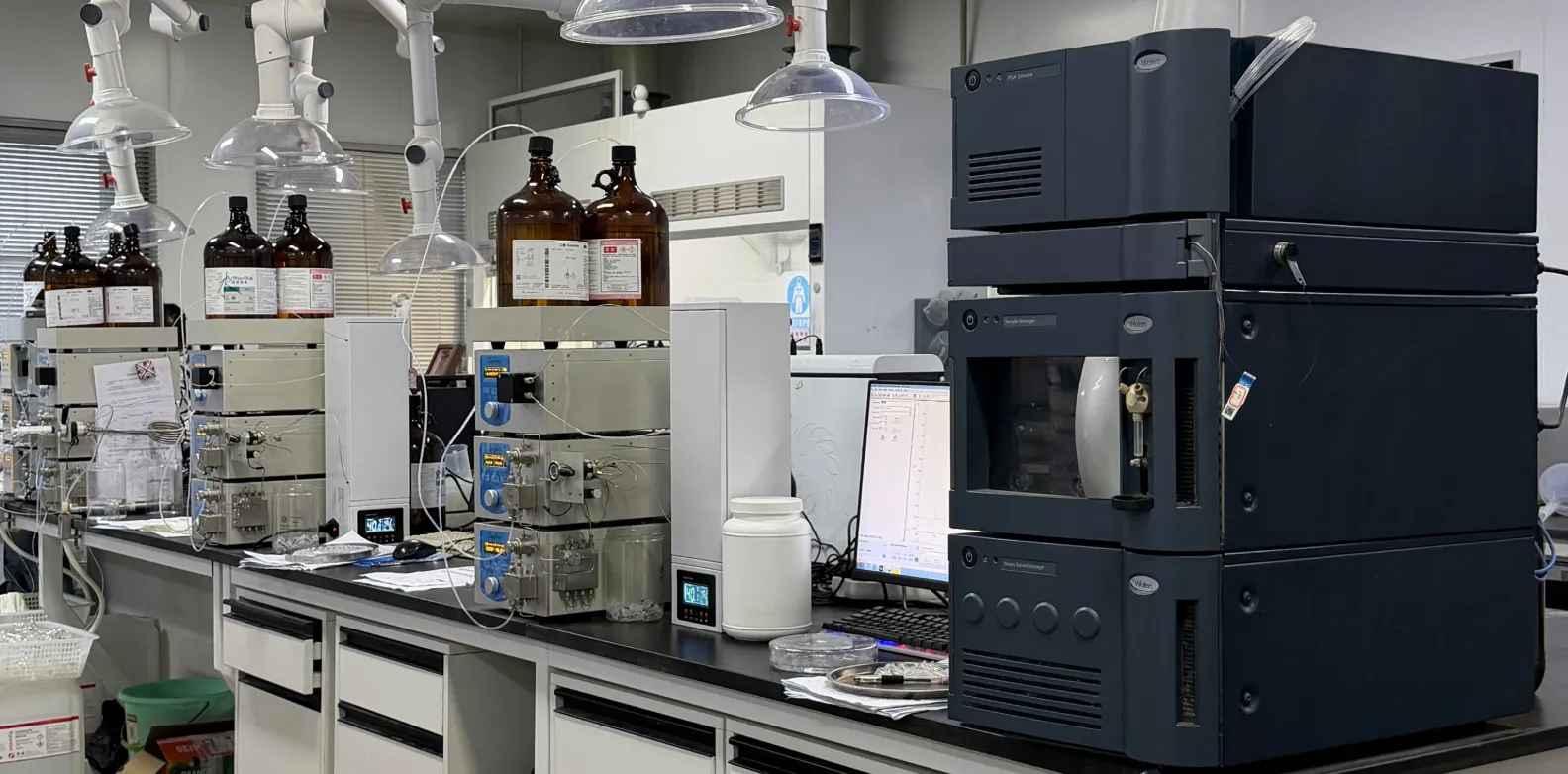
HPLC Purity and Net Peptide Content
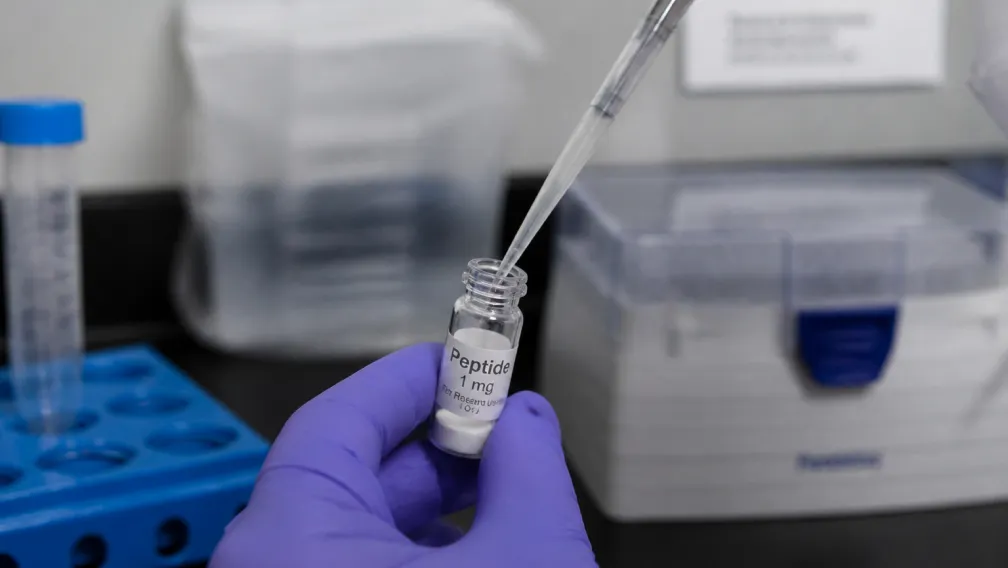
Lyophilized peptides are rarely 100% peptide by weight. Counterions such as trifluoroacetate or acetate remain bound to protonated side chains after purification, and the dry powder retains bound water. Depending on the sequence and salt form, net peptide content commonly falls between 60% and 85% of the gross weight. A batch can therefore read 99% pure by HPLC while delivering substantially less than 99 mg of actual peptide per 100 mg of powder. Work that depends on molar concentration, including receptor binding assays, quantitative mass spectrometry standards, and dose-response studies, requires the net peptide content from amino acid analysis or a comparable assay in addition to the chromatographic purity. When counterion identity affects the application, acetate or hydrochloride salt forms can be specified at the ordering stage.
Analytical Methods Used to Verify Purity
Reversed-Phase HPLC and UHPLC
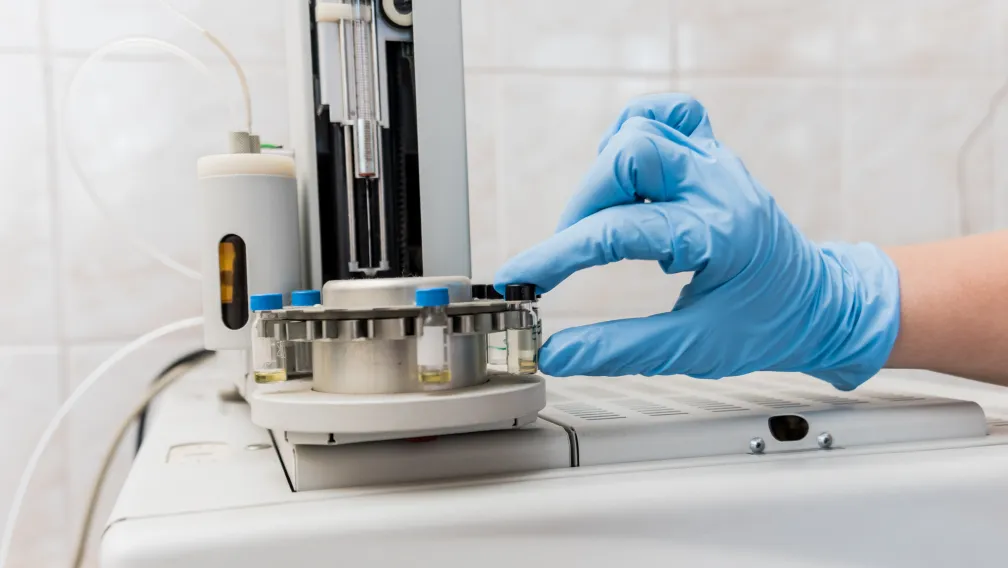
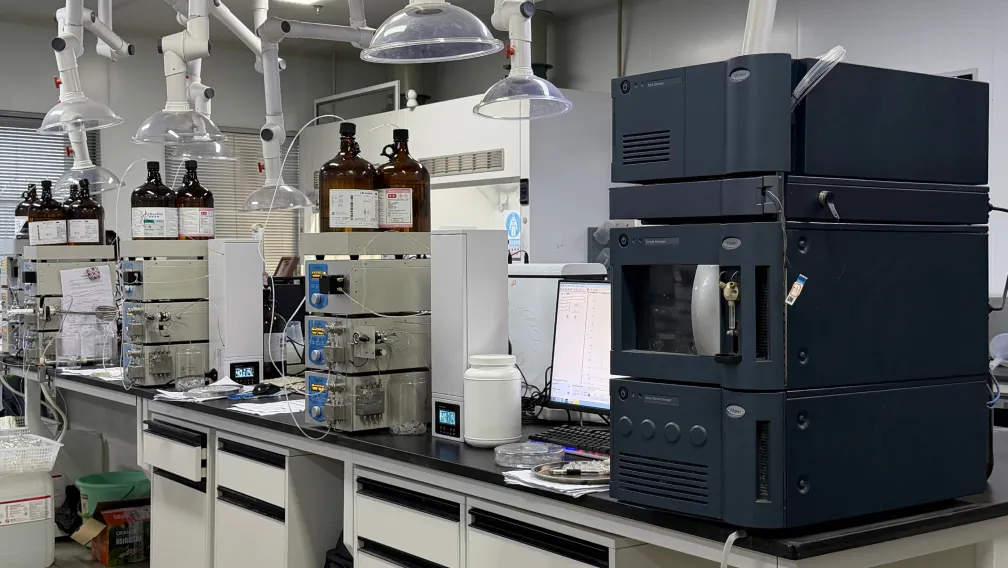
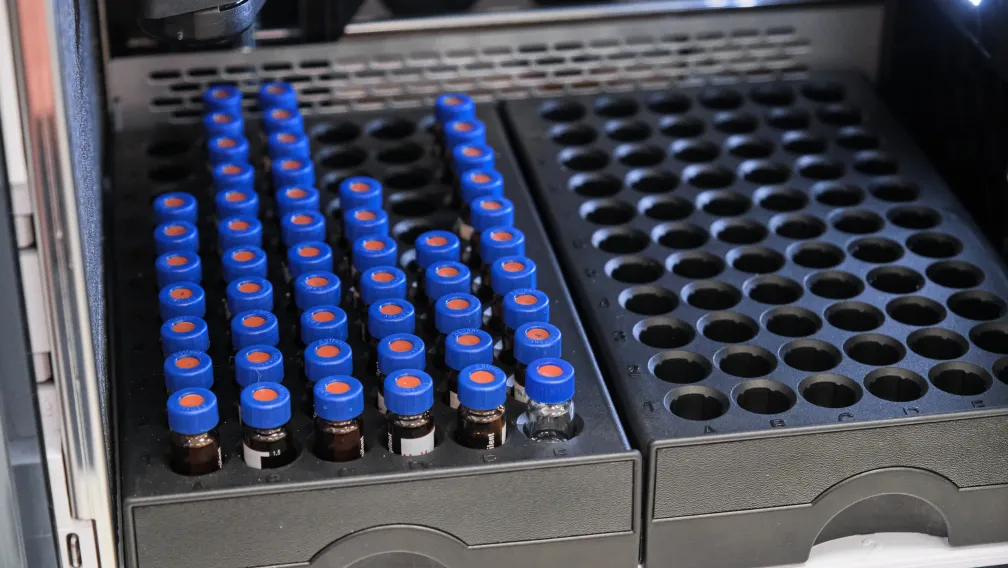
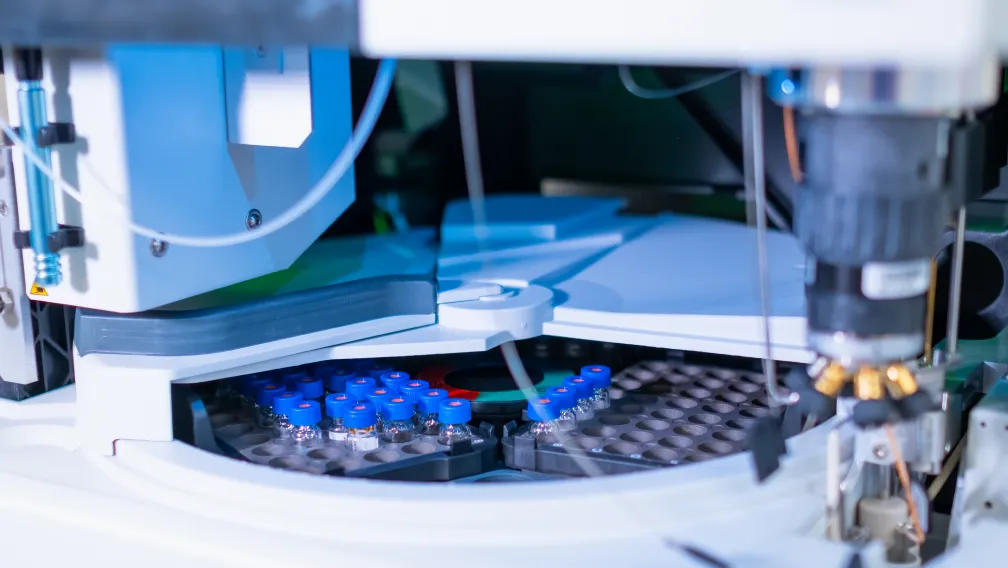
RP-HPLC on C18 columns remains the primary purity method because it separates peptides by hydrophobicity, which is exactly how most synthesis-related impurities differ from the target. UHPLC systems with sub-2 µm particles sharpen peaks and improve resolution of closely related species, such as a deletion sequence differing by a single residue. Method design matters in practice: a short, steep gradient can hide impurities beneath the main peak, while a shallow gradient across the elution window of the target resolves them. Routine analytical runs consume only micrograms of material; preparative-scale purification applies the same chemistry at far higher loading.
Mass Spectrometry
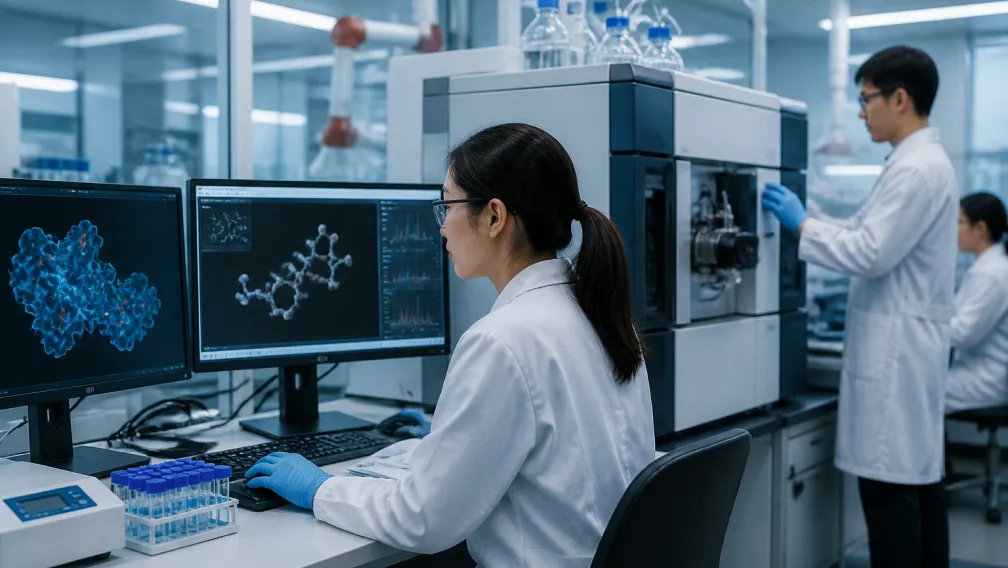
HPLC measures purity; mass spectrometry confirms identity. ESI-MS or MALDI-TOF verifies that the observed molecular weight matches the theoretical mass of the target sequence. A clean chromatogram with a single dominant peak is no proof of the correct compound, because a systematically wrong sequence can still chromatograph as one symmetrical peak. LC-MS couples both measurements in one run and supports impurity profiling by assigning masses to minor peaks, which is the analytical basis of drug peptide impurity characterization in regulated development programs.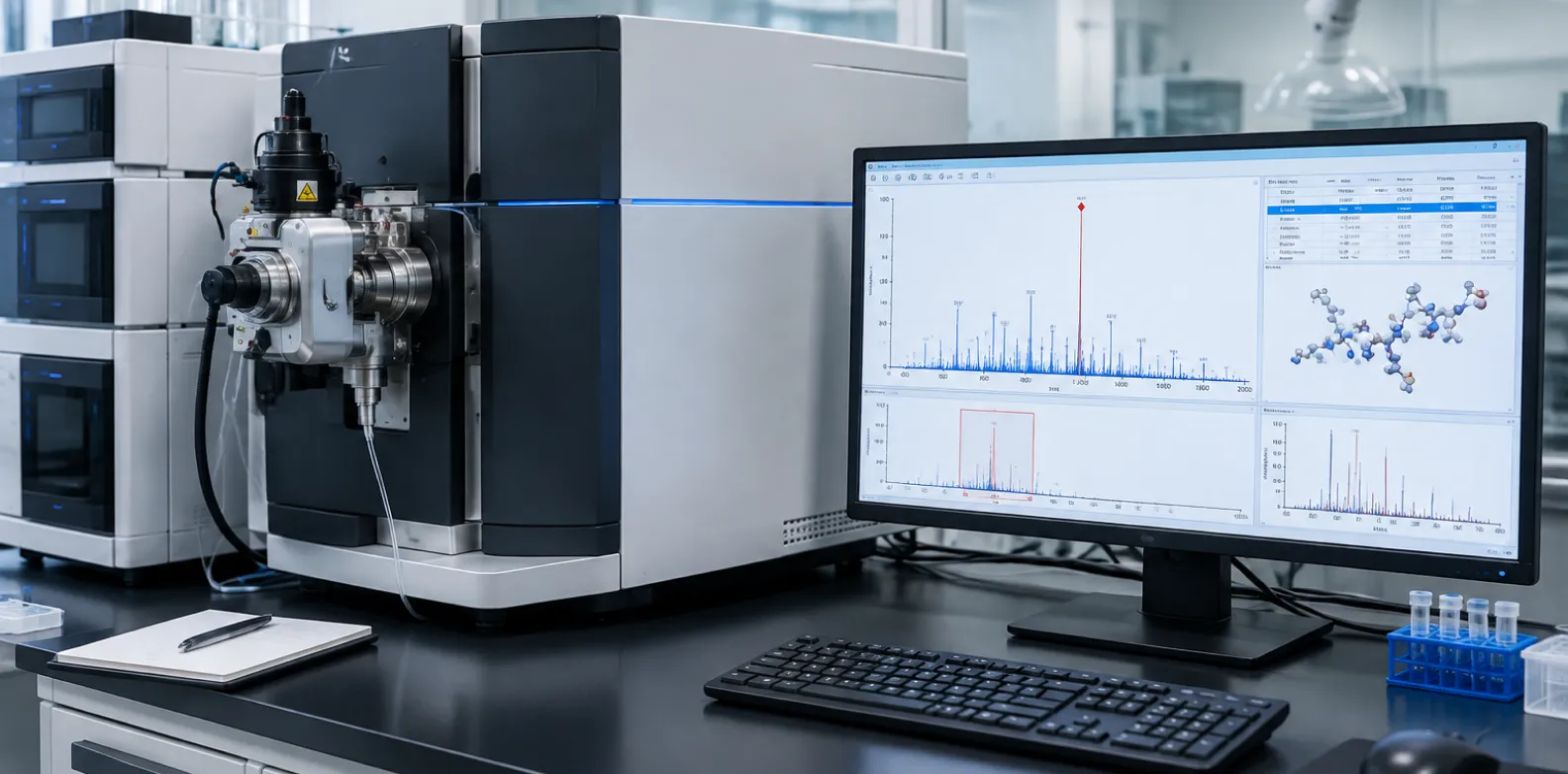
Supplemental Tests
Depending on the application, a complete analytical package can include amino acid analysis for net content, Karl Fischer titration for residual water, ion chromatography for counterion content, gas chromatography for residual solvents, and LAL testing for endotoxin when the material will contact cell cultures. None of these tests replaces HPLC purity. Each one answers a question the chromatogram cannot.
Common Impurities in Synthetic Peptides
Most impurities in a synthetic peptide originate in the chemistry of solid-phase synthesis or in downstream handling. The categories below account for the majority of minor peaks seen in routine QC chromatograms.
- Deletion sequences. Chains missing one or more residues, produced when a coupling step fails to reach completion. Deletions are the most frequent process-related impurity.
- Truncated sequences. Chains terminated early, often deliberately capped with acetic anhydride so they cannot elongate further. Capping keeps truncated chains shorter than the target, which simplifies their removal during purification.
- Incomplete deprotection. Residual side-chain protecting groups that survive the cleavage step, typically appearing as late-eluting, more hydrophobic peaks.
- Oxidation products. Methionine sulfoxide and oxidized tryptophan or cysteine variants, introduced by air exposure during synthesis, purification, or storage.
- Deamidation and aspartimide-related species. Asparagine deamidation and aspartimide formation at Asp-Gly or Asp-Ser motifs generate isoaspartate and other rearranged products that chromatograph close to the main peak.
- Diastereomers. Racemization during activated coupling, most often at histidine and cysteine residues, creates stereoisomers that standard RP-HPLC may fail to resolve.
- Insertion products. Chains carrying an extra residue from incomplete washing or double acylation.
- Non-peptide residues. Residual TFA, acetonitrile, ether, and water, which do not appear in a 214 nm chromatogram but still affect net content and cell-based assays.
Impurity identity matters as much as impurity quantity. Two batches at the same stated purity can perform differently if one carries oxidized variants and the other carries harmless deletion fragments. This is why impurity profiling, and for regulated programs individual impurity reference standards, belong in any serious quality strategy.
Purity Grades and Application Requirements
Specifying a purity grade is an economic decision as well as a scientific one. The table below summarizes the grades most suppliers quote and the applications each one serves.
| Purity grade | Typical form | Suitable applications |
|---|---|---|
| Crude, 50-75% | Desalted, unpurified | High-throughput screening, epitope mapping, initial polyclonal antibody generation |
| ≥85% | Purified | ELISA development, antibody titration, immunology screening |
| ≥95% | Purified, HPLC + MS verified | General in vitro research, cell-based assays, standard catalog peptides |
| ≥98% | Purified, full analytical package | Quantitative bioassays, receptor binding, enzyme kinetics, substrate peptides, cosmetic peptide raw materials |
| ≥99% | High-purity, impurity profiled | Reference standards, structural studies, drug peptide development, API-related work |
Sequences carrying difficult motifs, such as long hydrophobic stretches, multiple cysteines, or heavy modification loads, may have practical ceilings below these nominal grades. The achievable purity should be settled with the synthesis team before the order is placed, rather than after the first batch fails specification.
Why Higher Purity Costs More
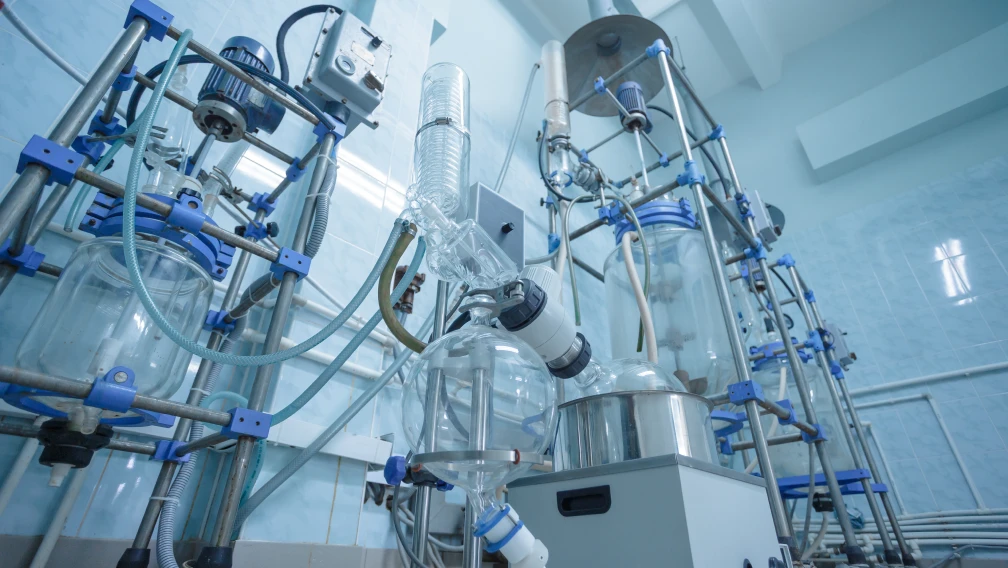
Purity is manufactured, and the step that sets it is preparative RP-HPLC. Moving from crude material to ≥95% removes the bulk of deletion and truncation products in a single pass. Moving from 95% to 99% requires resolving impurities that sit close to the main peak, which means shallow gradients, reduced column loading, repeated purification passes, and fraction-by-fraction analysis before re-pooling. Each pass discards material. Depending on the sequence, final yield after high-purity processing can fall to 30-50% of the crude input, which is the main reason purity drives the figures examined in our analysis of peptide synthesis cost. This relationship helps buyers avoid paying for purity their assay cannot use, and it also explains why unusually cheap high-purity offers deserve scrutiny. The synthesis route itself, outlined in our overview of how peptides are made, determines how much impurity the crude material carries into purification in the first place.
How to Evaluate a Supplier's Purity Documentation
A certificate of analysis is evidence, and evidence can be strong or weak. When reviewing purity documentation, check the following points:
- The lot number on the certificate matches the lot number on the vial you received.
- The actual chromatogram is provided, with the main peak, minor peaks, and integration marks visible.
- Column, gradient, mobile phase, and detection wavelength appear in a stated method block.
- Mass spectrometry data show the observed mass against the theoretical mass of the target sequence.
- The test date and the testing laboratory are identified.
- For quantitative work, net peptide content or counterion information is included or available on request.
Certificates that present a purity number without a chromatogram, without method parameters, or without lot traceability provide limited assurance. Programs advancing toward clinical supply under a peptide CDMO arrangement should additionally expect validated methods, defined impurity identification thresholds, and stability-indicating assays, which scale into the documentation packages used in large-scale peptide synthesis under GMP. After receipt, material should be handled according to established stability and storage practice so that the purity verified at release survives until the day of use.
Specifying Purity in Your Next Order
When requesting a quotation, state the target sequence, the required quantity, the purity grade, the preferred salt form, and any modifications. If the appropriate grade is unclear, describe the assay to the synthesis team. A short technical discussion at the quotation stage costs nothing and routinely prevents an expensive purity upgrade later. Submit your sequence through our custom peptide synthesis page, or contact us with your specifications to receive a quotation with batch-specific HPLC and MS documentation.
-

Synpeptide
peptide-focused CRO/CDMO company
The SynPeptide Research Team brings together scientists specializing in peptide synthesis, purification, and analytical characterization. Drawing on hands-on laboratory experience across custom and catalog peptides, the team shares evidence-based insights for researchers, formulators, and product developers. All content is reviewed against current scientific literature and internal quality-control data, reflecting SynPeptide's commitment to accuracy, reproducibility, and the responsible communication of peptide science.