Our peptide synthesis platform produces diverse structural peptide classes, from short bioactive motifs to long-chain linear polypeptides and complex cyclic scaffolds. Every target sequence is assembled under strict stereochemical control, delivering research-grade and analytical-grade materials with customizable purity up to ≥98% via analytical RP-HPLC.
Overcoming sequence-dependent instability requires targeted molecular engineering. Through our modification platform, we execute stable isotope labeling (13C, 15N), site-specific phosphorylations, lipophilic acylations, head-to-tail cyclizations, and the synthesis of deliberate degradation isomers as stability-indicating impurity standards.
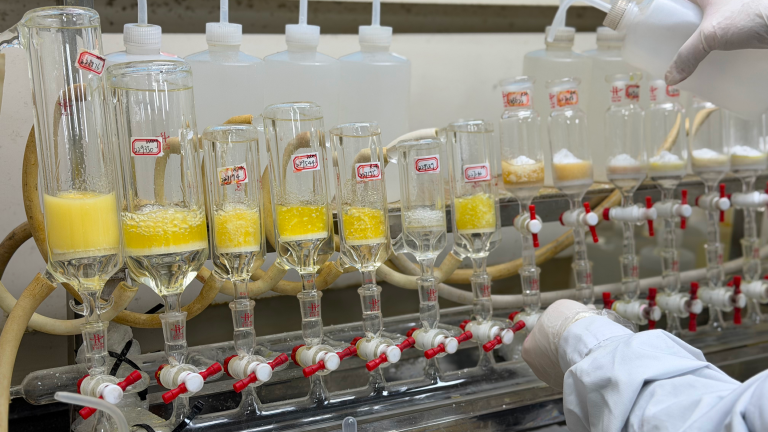
Operating high-capacity automated reactors and industrial preparative HPLC purification suites, our facilities scale peptide production from milligram-level exploratory batches to multi-kilogram commercial lots, supported by complete batch-to-batch reproducibility and rigorous regulatory documentation.
Our portfolio encompasses all primary functional classes: cosmetic peptides (signal, carrier, and neurotransmitter inhibitors), drug peptides (hormone and metabolic receptor agonists), cyclopeptides (disulfide- and amide-linked rings), drug peptide impurities (degradation and process-related standards), substrate peptides (enzymatic chromogenic/fluorogenic probes), and peptide nucleic acids.
Complex sequences often suffer from on-resin aggregation and coupling failure. Our peptide synthesis platform resolves these constraints using optimized low-loading resins, pseudoproline dipeptides, elevated-temperature couplings, and directed folding protocols for multi-disulfide frameworks.
Every delivered compound ships with a comprehensive Certificate of Analysis (COA), analytical RP-HPLC chromatograms verifying purity, and electrospray ionization mass spectrometry (ESI-MS) confirming molecular identity. High-resolution LC-MS/MS, counter-ion quantification (TFA/acetate), water content (Karl Fischer), and chiral analysis are available upon request.
Through our large-scale peptide synthesis infrastructure, we transition molecules smoothly from exploratory milligram quantities to multi-kilogram production lots, employing automated production skids, high-throughput axial compression HPLC columns, and industrial freeze-drying equipment.
Yes. Via our custom peptide synthesis and peptide modification services, we manufacture client-specified de novo sequences, modified analogues, branched structures, and peptide-drug conjugates tailored to specialized analytical or biological requirements.
As a fully integrated peptide CDMO partner, we provide comprehensive process development, analytical method validation, impurity isolation and characterization, stability testing, and regulatory documentation to advance therapeutic candidates through preclinical pipelines and commercialization.
Our peptide library serves as a structured technical reference and synthesis platform for researchers, formulation scientists, and pharmaceutical developers. Rather than functioning as a standard retail inventory, this collection reflects our specialized chemical synthesis and process engineering capabilities across diverse functional peptide classes. Every listed molecule represents a characterized structural benchmark synthesized under rigorous quality control standards.
Peptide molecules within our library are categorized by physiological mechanism and structural architecture:
Constructing challenging peptide sequences requires mitigating steric hindrance and sequence-dependent on-resin aggregation. Our custom peptide synthesis platform utilizes optimized Fmoc chemistry, specialized low-loading solid supports, microwave-assisted coupling protocols, and segment condensation strategies to assemble long, difficult, and hydrophobic sequences with exceptional fidelity.
Translating peptides into viable research tools and therapeutic candidates frequently requires chemical modification to enhance stability and pharmacokinetics. Through our peptide modification services, we engineer N-terminal fatty acid acylations, PEGylation, fluorescent and biotin labeling, stable isotope incorporation (13C, 15N), and orthogonal multi-disulfide bridging systems.
Moving candidates from initial analytical screening to commercial manufacturing demands robust chemical engineering. Our large-scale peptide synthesis facilities manage commercial lot production via large-bore preparative HPLC columns and automated lyophilizers. Integrated within our comprehensive peptide CDMO operations, we provide analytical method development, impurity profiling, and regulatory technical packages to support your development pipeline.
Peptide products listed within this technical library are supplied strictly as raw materials for laboratory research, analytical method development, and pharmaceutical formulation. They are not finished pharmaceuticals and are not intended for human or veterinary administration.


