
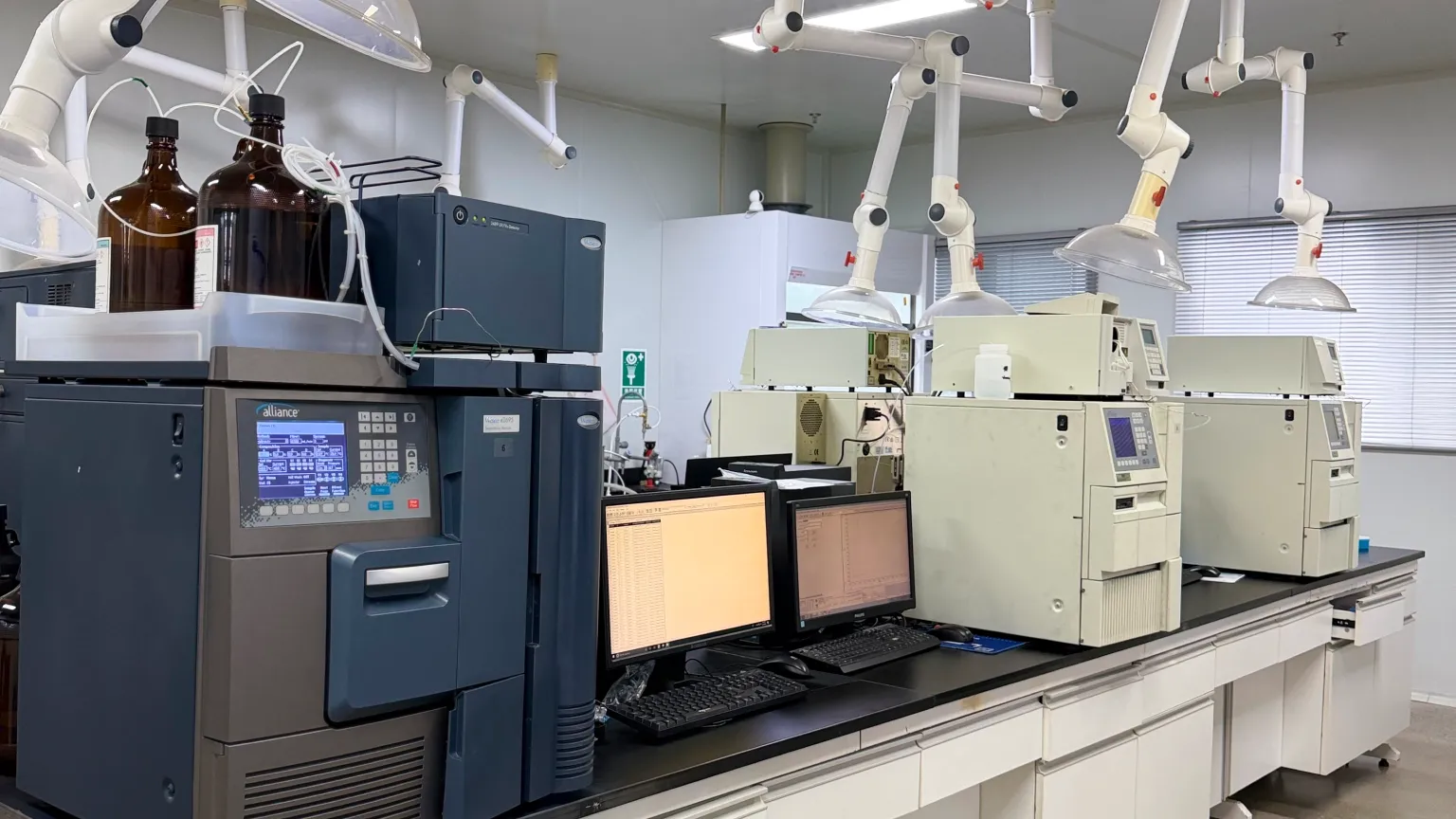
Our specialized solid-phase peptide synthesis (SPPS) platform delivers sequence-defined impurity standards, including difficult deletion fragments, truncated sequences, and amino acid insertion variants. Every target compound is synthesized under strict stereochemical control and purified via preparative HPLC to defined specifications (typically ≥90%, ≥95%, or ≥98%) with LC-MS verification.

Isomeric and degradation impurities often present identical masses or near-identical retention times to the active API. Through our peptide modification platform, we execute targeted synthesis of D-amino acid diastereomers, beta-aspartyl rearrangement isomers, deamidated species, and methionine sulfoxides, providing definitive analytical controls for resolving co-eluting peaks.
Operating dedicated analytical development and synthesis suites, our facilities support pharmaceutical developers from impurity isolation and structural elucidation to multi-gram custom resynthesis. We provide comprehensive analytical dossiers—including qNMR, high-resolution LC-MS/MS, and Karl Fischer titration—tailored to support IND, NDA, and ANDA regulatory submissions.
Our platform synthesizes all primary classes of peptide impurities: sequence-related variants (deletion fragments, truncations, insertions), stereochemical and structural isomers (D-amino acid diastereomers, beta-aspartyl peptides), degradation products (methionine sulfoxides, deamidation at Asn/Gln, hydrolytic cleavages), and covalent multimeric species.
Regulatory agencies (such as FDA and EMA) mandate strict identification and quantification of all impurities above identification thresholds in therapeutic peptide APIs. Synthetic reference standards allow analytical laboratories to establish relative retention times (RRT), determine relative response factors (RRF), and validate stability-indicating HPLC/UPLC methods.
Isomers cannot be resolved by standard mass spectrometry alone. Through our peptide modification services, we systematically incorporate specific D-amino acids, synthesize isoaspartyl (beta-aspartyl) peptide linkages, or execute controlled air oxidation, generating authentic isomeric standards to confirm peak assignments.
Every impurity standard is released with a comprehensive Certificate of Analysis (COA), analytical RP-HPLC purity chromatograms, and high-resolution electrospray mass spectrometry (ESI-MS). Additional structural characterization—including 1H/13C NMR, 2D-NMR, peptide mapping, residual counter-ions (TFA/acetate), and water content (Karl Fischer)—is provided per specification.
Yes. When an unknown peak appears during stability testing or process development, our analytical and synthesis teams utilize LC-MS/MS fragmentation to elucidate the structure. Via custom peptide synthesis, we then resynthesize the candidate molecule to verify its chromatographic and mass spectral identity against the observed impurity.
As an integrated peptide CDMO, we deliver end-to-end CMC support, from forced degradation studies and mass balance determinations to qualified impurity reference standard supply and technical documentation, ensuring full compliance with ICH Q3A/B and USP guidelines.
Peptide active pharmaceutical ingredients (APIs) exhibit complex impurity profiles resulting from their multi-step solid-phase assembly and susceptibility to diverse chemical degradation pathways. A peptide impurity reference standard is an individually synthesized, rigorously purified, and structurally characterized entity corresponding to a specific related substance found in a peptide drug product. For pharmaceutical analytical chemists and quality control teams, these standards are indispensable tools for establishing peak identity, determining Relative Response Factors (RRF), and validating stability-indicating chromatographic assays according to ICH Q3A/B guidelines.
Peptide drug impurities are broadly grouped into process-related byproducts and degradation-derived entities:
Resynthesizing an impurity molecule frequently presents greater synthetic hurdles than producing the active parent API. Deletion variants and beta-aspartyl isomers share extensive physical and chemical homology with the parent drug, making high-purity chromatographic isolation exceptionally demanding. Through our custom peptide synthesis platform, our chemists deploy orthogonal protecting group strategies, specialized coupling cocktails, and customized preparative gradients to isolate targeted impurities at high chemical purity (typically ≥90% or ≥95%).
Because isobaric impurities (such as D-His, D-Trp diastereomers or isoAsp variants) cannot be distinguished by molecular weight alone, authentic synthetic standards are essential. Through our dedicated peptide modification services, we intentionally incorporate D-enantiomers, synthesize authentic beta-aspartyl peptide backbones via orthogonal Asp protecting groups (e.g., Asp(OMpe)), or prepare stable-isotope-labeled (13C, 15N) analogues for quantitative LC-MS/MS bioanalysis and pharmacokinetic tracking.
Developing generic or biosimilar therapeutic peptides requires demonstrating impurity sameness relative to the reference listed drug (RLD). Our large-scale peptide synthesis infrastructure supports the multi-gram production of critical impurity standards required for analytical method transfers and stability testing protocols. Integrated within our comprehensive peptide CDMO operations, Synpeptide provides impurity isolation, structural identification by 2D-NMR, forced degradation profiling, and full analytical validation to support IND, NDA, and ANDA regulatory packages.
Peptide impurity materials listed within this technical library are supplied strictly as analytical reference standards for laboratory research, quality control testing, and regulatory method validation. They are not active pharmaceutical ingredients and are not intended for human or veterinary clinical administration.


