One-stop peptide synthesis from sequence to delivery. Lengths up to 200AA, purity up to 98%, as fast as 3 days.
LEARN MOREWe support 10+ modification types including cyclization, PEGylation, fluorescent labeling, phosphorylation, and carrier protein conjugation.
LEARN MOREGram to kilogram scale production with >98% purity. Monthly capacity up to 3 kg. Full QC documentation included.
LEARN MORERoute development, analytical method validation, process optimization, and quality studies — from bench to scale-up.
LEARN MOREWith over 10 years in peptide synthesis, we've built our platform around three things researchers care about most: synthesis success rate, delivery speed, and scale flexibility. Every project is backed by 50+ proprietary patents and a team where 20% hold advanced degrees.

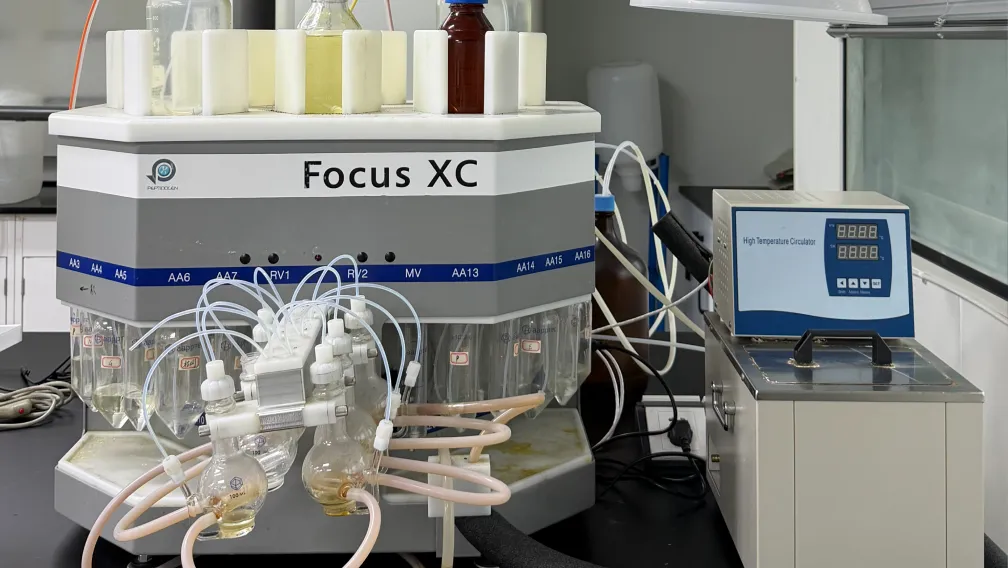
Our platform combines SPPS, LPPS, microwave-assisted synthesis, and fragment condensation to handle long, complex, and difficult sequences that many providers turn down.

Microwave synthesis technology cuts turnaround without compromising purity. For standard sequences, we deliver in as few as 3 days. Large-scale and modified peptides follow a project-specific timeline with dedicated 1-on-1 support.


Generally, a length of 10–15 amino acids is recommended. Longer peptides tend to elicit better immune responses, though synthesis costs increase accordingly. For MAP (Multiple Antigenic Peptide) systems, a length of 15 amino acids or more is preferred for optimal results. Peptides shorter than 10 amino acids typically yield poor immunogenicity.
For immunization purposes, a purity of 70–85% is generally sufficient.
(1) Peptides with a high proportion of strongly hydrophobic amino acids — such as Leu, Val, Ile, Met, Phe, and Trp — are difficult or impossible to dissolve in aqueous solutions. These residues may pose challenges in both purification and synthesis. (2) The proportion of hydrophobic amino acids should be kept below 50%, with no more than 5 consecutive hydrophobic residues. Charged amino acids should account for at least 20% of the sequence. Adding polar amino acids to the N- or C-terminus can also help improve solubility.
Peptides containing Cys, Met, or Trp are inherently challenging to synthesize and difficult to obtain at high purity. This is primarily because these functional groups are chemically unstable and prone to oxidation. Special care should be taken during both use and storage — avoid repeatedly opening the container to minimize exposure to air.
When amino acids such as Val, Ile, Tyr, Phe, Trp, Leu, Gln, and Thr are adjacent or repeated, the growing peptide chain may fail to fully extend and dissolve during synthesis, reducing efficiency. Sequence patterns associated with low yield include: repeated Pro residues, Ser–Ser sequences, repeated Asp residues, and four or more consecutive Gly residues.
Every peptide order undergoes a minimum of three verification checks before synthesis begins. Intentional alteration of amino acid sequences is absolutely not something we would ever do. In the unlikely event of an accidental substitution, it would be detectable by mass spectrometry. If a client remains concerned, we can provide photos or copies of our original synthesis records for full transparency.
Peptide synthesis is a highly customized process influenced by environmental factors such as temperature and humidity. A peptide that is difficult to synthesize in winter may be produced efficiently in spring or summer. As every peptide sequence is unique, there are inherently unpredictable variables that can affect outcomes from batch to batch.
We accept TT (Telegraphic Transfer), PayPal, and credit card payments. Please feel free to contact us for further details on completing your payment.
The biological activity of a peptide in experimental settings cannot be guaranteed — this is a limitation acknowledged across the entire peptide industry and is not unique to any single supplier.
Our peptides are subject to strict quality control and meet all specifications upon shipment. Discrepancies in test results may arise from differences in peptide properties, shipping conditions, storage environments, testing protocols, or instrument variations. Clients are welcome to submit their test reports, and our technical team will analyze the results and work toward a resolution.
Achieving 100% purity is scientifically impossible for any substance, including peptides. Trace impurities such as salts, residual peptides, or moisture are inevitable. Custom peptides are primarily used for early-stage research, and a purity of 95% or above is more than sufficient for conducting accurate and reliable experiments.
The solubility of a peptide is determined by its amino acid sequence and cannot be fundamentally altered. Methods that may help: adjust pH; use ultrasonic assistance; adjust temperature (≤30°C); add co-solvents (e.g., DMSO, DMF) by first dissolving in organic solvent then slowly adding water; for basic peptides dissolve in 10% acetic acid; for acidic peptides dissolve in 10% NH₄HCO₃.
Every peptide undergoes strict QC inspection before shipment, with test reports based on internationally recognized standards (MS and HPLC). If an experiment fails, we recommend reviewing the experimental procedure step by step. Our team is also available to provide professional guidance and support.
Our peptides are supplied in TFA (trifluoroacetic acid) salt form, which has a characteristically sharp, pungent smell. The finished peptide itself should be odorless. Any mild odor detected may be due to moisture absorption from the hydrophilic sequence. The salt form does not affect usability. If a client strongly objects, they may return the sample for reprocessing.
Two possible explanations: First, the peptide may have absorbed moisture during shipping due to its hydrophilic properties, causing liquefaction — this does not affect usability. Second, the sequence may be a short peptide (dipeptide or tripeptide) that is inherently difficult to lyophilize. Clients will be informed of this in advance. Direct dissolution and use is recommended to avoid quantity loss from re-lyophilization.
Peptides have a limited shelf life. We recommend storing at -20°C to -80°C in a sealed container and using them as soon as possible. Repeated freeze-thaw cycles can degrade quality — weigh out only the amount needed for each use.
Our peptides are supplied as powder, typically off-white in color. For long-term storage, keep away from light at -20°C. Short-term storage at 4°C is acceptable. Room temperature transport for short durations is permissible.